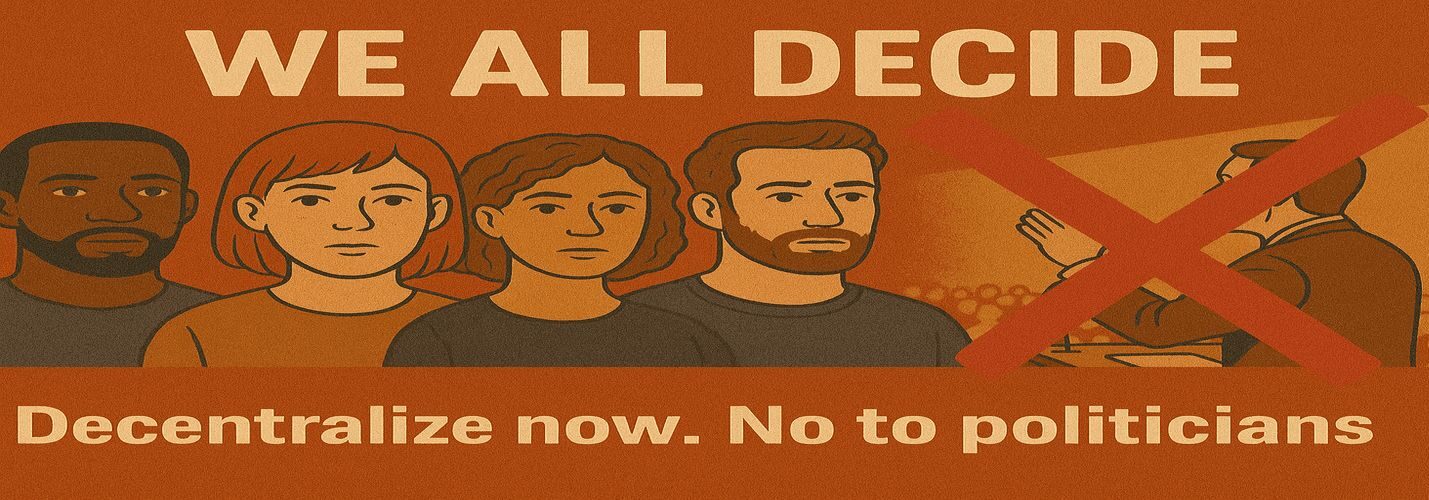
Images available for logged in users.
We All Decide Posts
Images available for logged in users.
No politician has ever given power to the people
We asked AI the following question: has there ever been a politician elected who promised to hand over all the power to the people and got elected on that basis and then actually did hand the power over to the people?
Images available for logged in users.
The Myth of Stupidity: Apathy, Not Ignorance
The pervasive belief that “most people are stupid” is a dangerous oversimplification. While individual intelligence varies, the perception of widespread stupidity often stems from a misunderstanding of human behavior, specifically the role of emotional responses, particularly apathy, in shaping decisions and actions. This article will explore how apathy, rather than a lack of intelligence, frequently underlies behaviors interpreted as “stupid,” challenging the common misconception.
Images available for logged in users.
The Wisdom of the Crowd vs. The Pronouncements of the Powerful
Direct democracy isn’t about chaos; it’s about harnessing the combined brainpower of a nation to build a better future. How can we empower citizens to participate meaningfully in shaping their own lives and communities?
Images available for logged in users.
The Crumbling Pillars of Democracy: A People’s Cry
The very foundation of democracy rests on a simple, yet profound principle: the right of the people to have a genuine say in the decisions that shape their lives and their nation’s destiny. This isn’t merely a matter of ticking boxes on a ballot; it’s about ensuring every citizen, regardless of their political affiliation or ideology, feels heard, respected, and valued in the processes that determine their future. For too long, this fundamental right has been eroded, chipped away by a growing disregard for the citizenry
Images available for logged in users.
How do Cantons work in Switzerland?
Switzerland’s unique political system allows for a high degree of direct democracy, particularly within its cantons. This means that citizens have a direct say in shaping their local laws and policies, going beyond simply electing representatives
Images available for logged in users.
#IndividuallyTogether
We feel the pain, the indignity, of every mad sounding public decision you’ve seen made in recent times. We know, like you, there’s little to no connect by the decision makers or today’s chiefs to common sense, to spirituality, to your essence, to our essence. They serve their own master, they don’t even communicate with…
Images available for logged in users.
Countries practising Direct Democracy
Direct democracy, where citizens directly participate in decision-making, has become a growing trend worldwide. While often viewed as a utopian ideal, its practical implementation varies significantly across different countries. This article examines the successes and challenges of direct democracy through case studies of Switzerland, Taiwan, Mexico, and Uruguay, highlighting the diverse ways this system operates in practice
Images available for logged in users.
Power of Empowerment
An empowered society is not merely a utopian ideal but a tangible reality that holds the key to a brighter future. It’s a society where individuals are equipped with the tools, knowledge, and opportunities to actively participate in shaping their own lives and the world around them. This empowerment transcends mere economic prosperity; it’s about fostering a sense of agency, responsibility, and collective action.
Images available for logged in users.
George Orwell’s last words
George Orwell might sound doom and gloom but it has come to pass Taken from the above website (Open Culture): More than 60 years after his death and the closely preceding publication of his best-known novel 1984, we look to George Orwell as a kind of prophet of the ills of corporatism, socialism, authoritarianism, totalitarianism…
Images available for logged in users.
Voting Process Discussion Paper
This research report delves into the intersection of AI technologies and governance, advocating
for a shift towards human-centered, decentralized systems that reflect the diversity of human values. As AI
reshapes societal and economic structures, it offers an opportunity to reimagine governance in a way that
enhances personal responsibility, creativity, and human fulfillment. The report critiques historical trends of
“self-domestication,” where individuals have been confined to passive roles in rigid economic and political
systems, and explores how AI and alternative currencies can reverse this trend by fostering more flexible,
decentralized forms of governance.
Central to the report is the call for governance models that allow for experimentation, creativity,
and voluntary participation rather than imposing one-size-fits-all solutions. The rise of AI presents the
chance to alleviate labor burdens and create systems that balance global competition with protections for
those left behind. It also emphasizes the need for resilience through diversity, arguing that centralized
systems have reduced resilience and are prone to collapse.